
Food Truck Speed of Service: A Faster Line Doesn't Mean Faster Food
- food-truck
- operations
- pos-setup
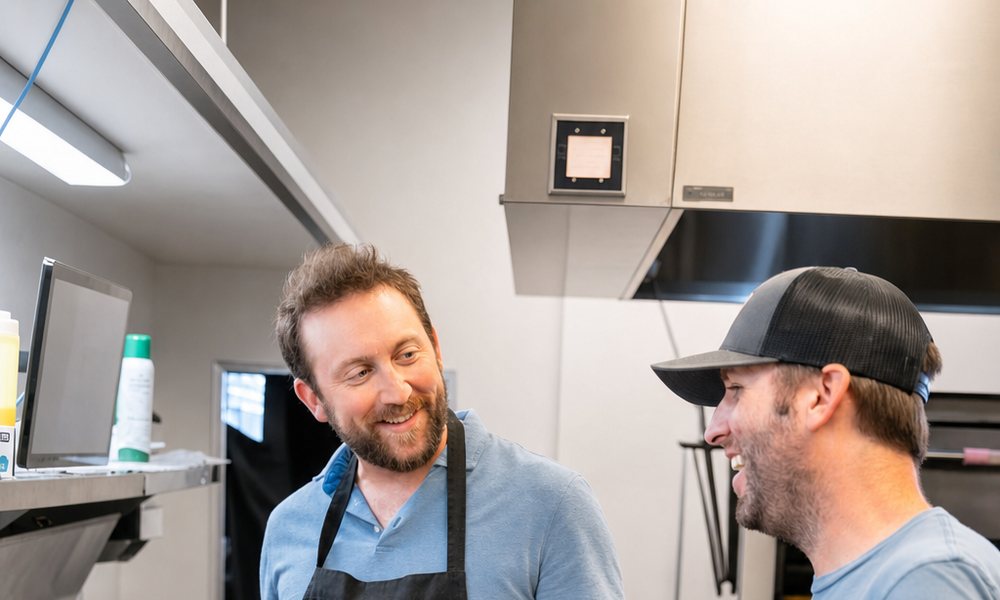
The speed-of-service advice for food trucks is written almost entirely by ordering-app vendors, and the pitch is always the same: move the line faster. One quotes a sub-90-second ticket rule and claims line-walking with tablets can double your throughput. Another sets an under-3-minutes-per-customer target and warns that people abandon queues around the 8-to-10-minute mark. The two of them cite improvement numbers suspiciously close to each other’s.
Here’s what none of that addresses. A faster moving line doesn’t mean people get their food faster.
Where does the wait actually live?
Order-taking and food-making are two different machines running at two different speeds, and only one of them has a fan and a burner. We can ring in orders far faster than any oven can bake them. Speed up the register side without touching the production side and you haven’t shortened anyone’s wait. You’ve moved it. The customer used to stand in a line holding cash. Now they stand in a crowd holding a receipt, wondering where order 47 is. Same wait, worse mood, and now the window has to manage it.
At our events, the pace is set by the oven and the amount of space we have. Always. Both of those got decided the day the rig was built, which is a longer story I told in the sold-counts post. The short version: your ceiling is a build decision, and no tablet raises it.
How many people actually work the line?
We never put more than 3 people in one of our trucks at a time. Most events run on 2. When we can swing it, 1.
That’s not a labor-cost brag. It’s geometry. A trailer galley is a hallway with appliances, and every body in it is standing on prep space, stage space, or the path between the two. Two people who know the menu beat four people negotiating right-of-way. If your plan says you’ll fix a slow window by adding people, look at the floor first and ask where they’d stand.
If the oven sets the pace, does the register matter at all?
More than ever, just not as a stopwatch. The register’s job during a rush is to stop manufacturing problems for the kitchen:
- One screen, no scrolling. A cashier hunting for a button is a self-inflicted delay.
- Buttons named what the sign says. Every translation between the sign, the cashier, and the ticket is a chance to make the wrong food, and a remake is the slowest ticket there is.
- Required modifiers. The register refuses to send a half-decided order, so nobody runs back down the line to ask which size.
I wrote the full configuration playbook in Setting Up Toast on a Food Truck. The one-sentence version: a POS config is a list of decisions, and every decision made in advance is a question the window never has to ask at speed.
When should online ordering go off?
The moment the walk-up line reaches your production ceiling. Past that point, every online order is a promise with a broken quote time attached, placed by someone who can’t see how deep you are. Turning it off at peak is often the professional move. Toast makes it one tap and it turns itself back on. The vendors selling you ordering channels will not lead with this, so I will: the off switch is a speed-of-service tool.
So what would I actually do to serve faster?
In order:
- Shrink the menu until the window can produce it. The line can only move as fast as the slowest station, and a short menu is the cheapest capacity upgrade there is.
- Fix the register’s config, per the list above, so the kitchen never has to guess.
- Match the crew to the box. Two who know the flow, three max.
- Own the off switch for online orders, and use it without guilt.
- If you’re still designing the rig, size the oven and the workspace for the events you actually want. That’s the ceiling, and it’s the one thing you can’t fix on a Saturday.
Number 5 is the free one to get right, and the cheapest time to get it right is before the build. If you’ve got a builder’s quote or a layout in hand, send it through the pre-build assessment and I’ll look at where your oven and your space ceiling would land. And if the window already feels slow, start with a stopwatch on your own operation this weekend: time the gap between paying and eating, not the length of the line. That gap is the thing your customer remembers.
Questions people actually ask.
How do you make a food truck line move faster?
First check whether the line is actually your problem. Ours never is: the oven and the space set the pace, and taking orders faster than you can bake just moves the crowd from the window to the pickup shelf. Fix the menu and the production ceiling before you touch the line.
What's a good ticket time for a food truck?
The ordering-tech vendors quote targets from under 90 seconds to under 3 minutes per customer. I'm not publishing a stopwatch number of ours, but I'll say the target that matters is the gap between paying and eating, and the oven owns most of that gap.
How many people should work the window?
We run 2 at most events, 3 at the absolute max, 1 when we can swing it. In a trailer-sized box, a fourth person stops adding speed and starts absorbing the space you cook in.
Should you take online orders at a busy event?
Only while you can keep the promises. When the walk-up line is already at your production capacity, every online order is a quote time you're going to break. Turning online ordering off at peak is often the professional move, and turning it back on when the line breathes takes one tap.
Does a better POS speed up service?
A better POS config does: one screen, buttons named what the sign says, required modifiers so nobody plays twenty questions mid-rush. The hardware was never the slow part.