
Food trucks & trailers. First build to full fleet
The proof is in your bottom line.
Four rigs built, two trucks on the road, and a restaurant behind them. I've made the expensive mistakes so you don't have to: which builders deserve your deposit, what the health department actually checks, how sales tax works when your trucks cross city lines, and when truck two makes sense. Ask me before you sign anything.
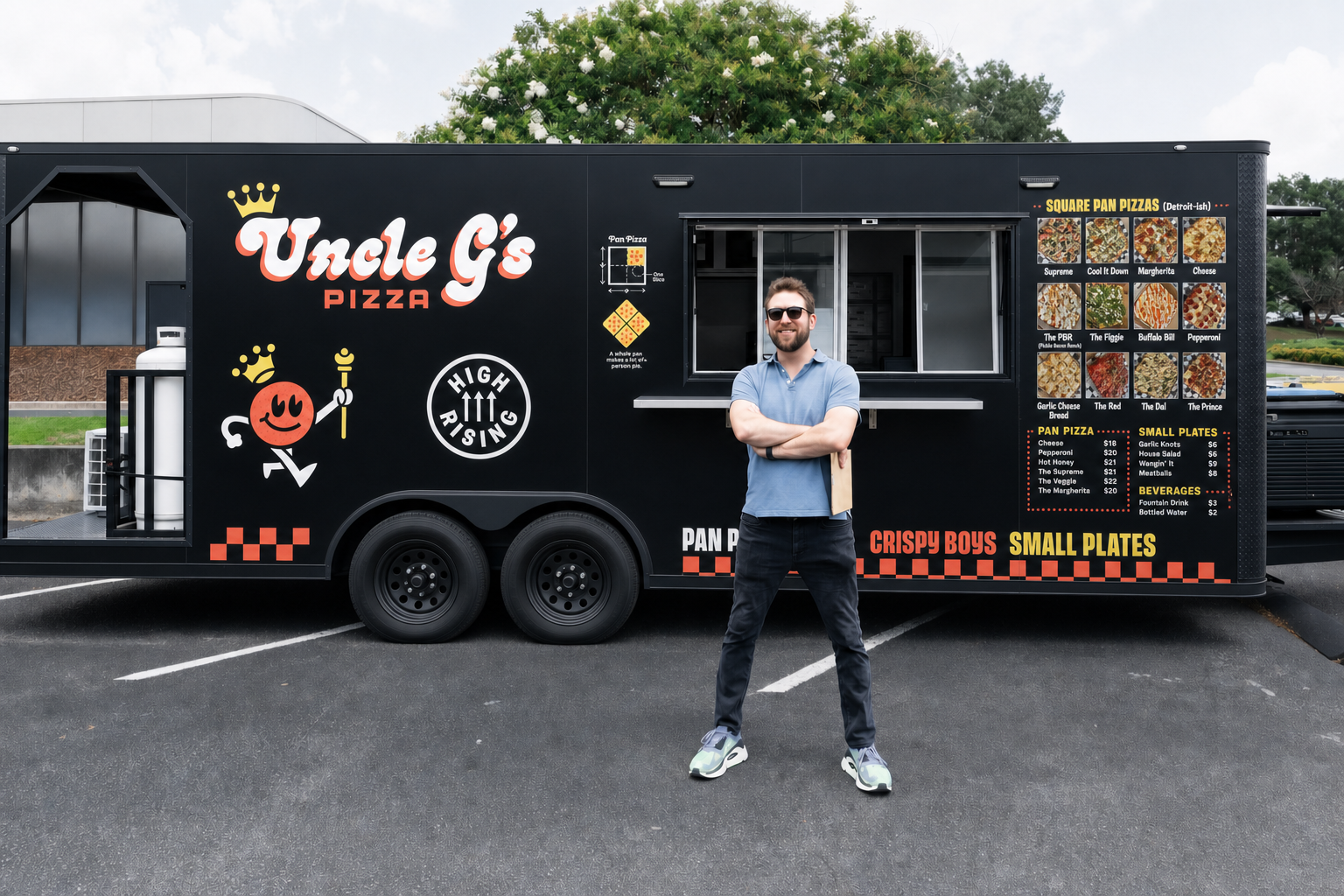
Who I help
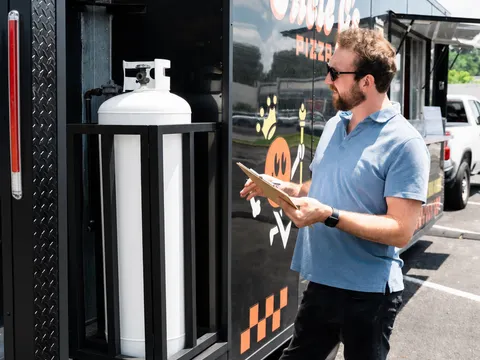
You haven't signed with a builder yet
Good. Stay there for one more call. I've had four rigs built and I know the builders: who's worth the wait, who's worth the money, and who shouldn't have your deposit. Bring me the quote and I'll read it like I'm the one paying it.
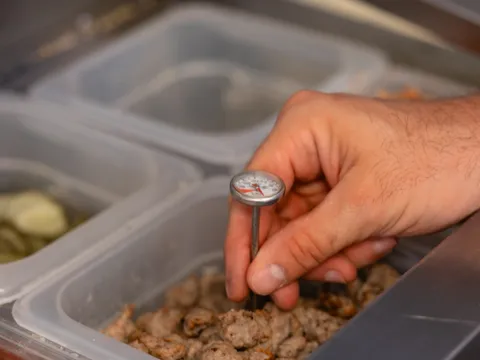
You're open, and the paperwork is winning
County codes, health inspections, commissary logs, and a different sales tax rate every place you park. We run two trucks and a restaurant through that same gauntlet every week, and the systems do the remembering. I'll set you up with the same ones.
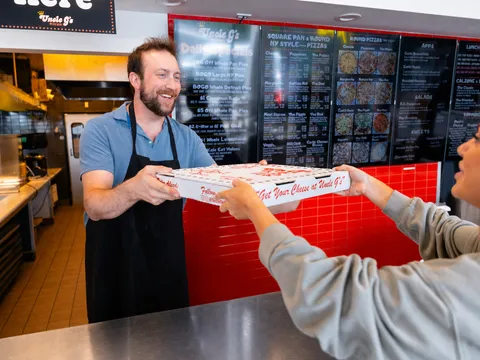
You're ready for truck two
Maybe you are. The second truck multiplies whatever you've already got: profit if the first one runs without you, chaos if it doesn't. We added ours in 2022, did $1.1M the next year, and it worked because the systems came first. That math is question one on the call.
If your kitchen has wheels (or will), you're in the right place: trucks, trailers, pop-ups on their way to a rig, restaurants adding a mobile unit. Brick-and-mortar with no truck in the plan? The field notes are free and you're welcome to them, but mobile food is the whole game here.
Systems > training > quality > service. In that order.
Systems come first, designed so other people can follow them without you hovering. Then you train your team on those systems, and treat them like the professionals the system frees them to be; great employers keep great people. Quality stops being heroic and becomes repeatable. And service? Service is what a proud team does on a good system: a culture of getting things done and being proud of the work. Fix the order and you stop being the human duct tape holding the whole thing together. Then take the hours you get back and spend them like an owner: growth, marketing, an actual Sunday. And when the school raffle calls, say yes. Gift cards, not cash. The business that's the glue of its community is the one the community holds up.
Around here that order has a name: The Proof Box Method. A proof box is a controlled environment where dough rises on its own. Build the box, and the business rises.
See the offers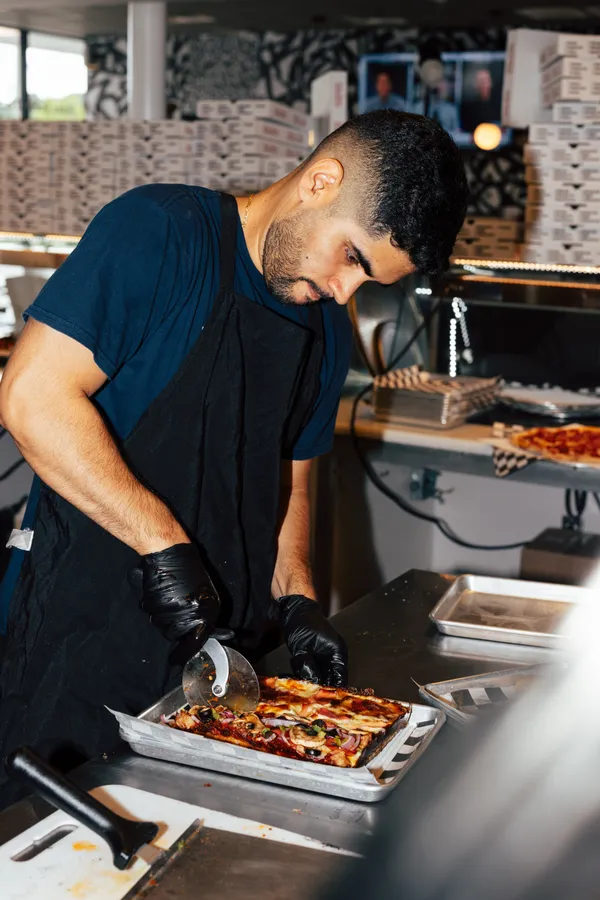
Services
Ways to work together.
Not ready to pay anybody? Fair. Send your build in for a free assessment, or start with the free checklist and the field notes.
The other thing I do
Your back office is a system too.
Trucks multiply paperwork faster than they multiply revenue: sales tax in every municipality you park in, invoices, payroll, food cost by rig. I set up the same back office we run at Uncle G's, where the sales tax is tracked and broken down for filing automatically, every month. I'm the operator who built his own POS, so I've earned the opinions.
See the AI setup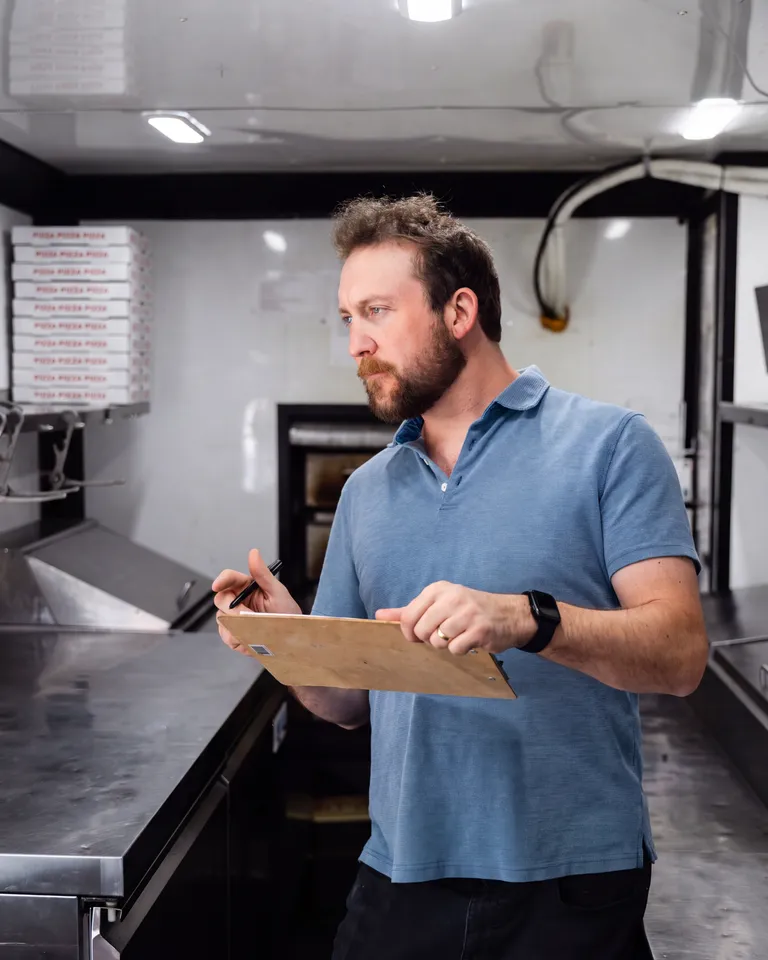
Every freedom guru sells the same dream. I actually dug the tunnel.
I own Uncle G's Pizza, a restaurant and two food trucks in Birmingham, Alabama. Getting here took four truck-and-trailer builds, and I paid full price for every lesson in them. For years I was the best employee my business had: first in, last out, every fire mine to fight. Then I got serious about systems. Dough programs my team runs better than I do, training that sticks, numbers I check weekly, and eventually a POS I built myself. The business doesn't need me on the line anymore. That's not bragging. That's the product. The proof of my systems isn't that I work every shift. It's that I don't have to.
Read the full story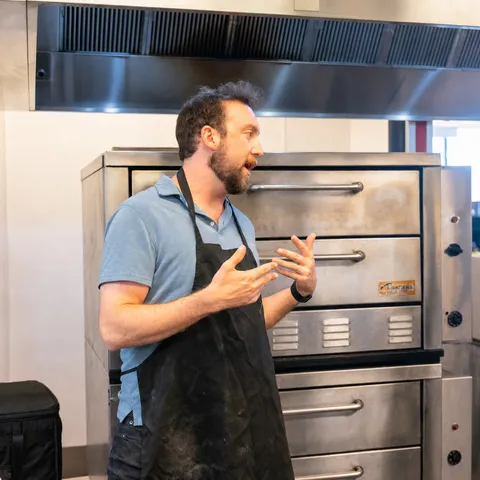
The hard call
I cut a $15,000-a-month loss out of my own restaurant.
Almost every restaurant has a room, a daypart, or a service line that loses money - and almost nobody cuts it, because cutting looks like failure and hanging on looks like commitment. Mine was the dining room. I closed it, kept the restaurant open, and the loss stopped.
That's the call I get hired to help owners make. It's also the only kind of proof I trust.
How it works
- 1
Book a call
Show up with your numbers, your builder's quote, or just the napkin sketch.
- 2
Get the plan
You leave with a recording and a prioritized action list, not vibes.
- 3
Build it
Run the list yourself, or bring me along for the launch.
Field notes
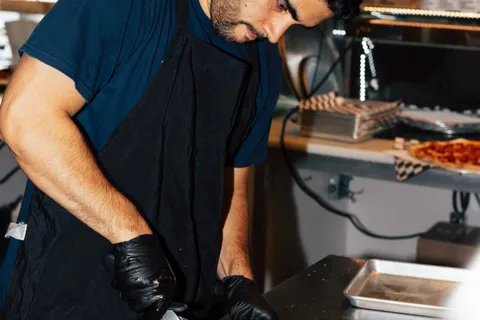
How Many People Does It Take to Run a Food Truck?
One person handles up to $500, two handle anything above it, three is the max. Why our trucks run about 17 percent labor, and why that number gets decided when you book the event.
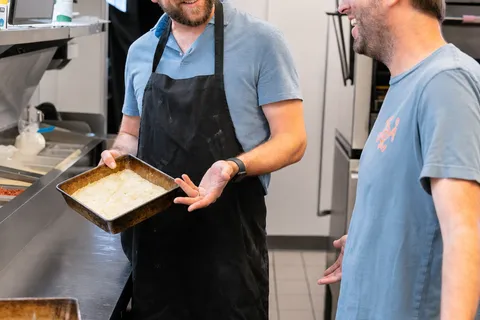
Food Truck Speed of Service: A Faster Line Doesn't Mean Faster Food
Two people run most of our events. The ordering apps promise to double your throughput, but the line was never the ceiling: the oven is.
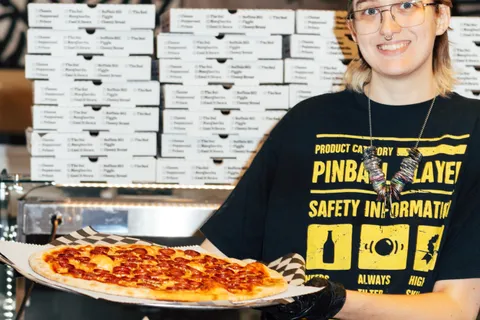
How Many Pizzas Does a Food Truck Actually Sell in a Day?
Real sold-counts from a working pizza trailer: 60 pies on a typical $1,500 event, a $6,700 best day, and why the 70-an-hour oven specs measure the wrong thing.
Steal my launch checklist.
The exact list I'd run before opening another truck: permits, equipment, POS, insurance, and the stuff nobody puts in the YouTube videos. Free.
One email with the checklist. No drip campaign. Unsubscribe whenever.
Questions people actually ask.
I haven't bought a truck yet. Is it too early to talk?
Before you buy is the cheapest possible time. The call that stops you from buying the wrong rig pays for itself about forty times over.
Can you review a builder's quote before I sign it?
Yes, and that's the single best use of a call. I've had four rigs built. I know the builders, who's worth the wait, and who I'd steer you around. I'll go through the spec and the equipment list line by line and flag what's missing, what's double-priced, and what to double-check with your county before it's welded in. Names and opinions stay on the call, where I can be useful about them.
Truck or trailer?
I own a trailer and I'd probably buy one again, but it depends on your market, your tow vehicle, and your sites. It's question one on any call.
Do you help with health department and county codes?
Every week, in my own business first. I'm not a lawyer, so treat all of it as operator experience: plan review, commissary requirements, and inspections, walked through the way someone should have walked me through them. What your county actually checks, the questions to ask before you spend, the paperwork that keeps inspections boring. You verify with your jurisdiction. I make sure you know what to verify.
How do you handle sales tax when trucks sell in different cities?
With a system, because a shoebox stops working the day you add a second municipality. Different cities mean different rates, filings, and deadlines. Our own trucks cross those lines every week, and the sales tax gets tracked and broken down by municipality automatically, every month. Setting that up for your business is exactly the kind of back-office work I do.
When should I add a second truck?
When the first one runs without you standing in it, and not a day sooner. We added our second in 2022 and did $1.1M the next year, but the truck didn't do that. The systems did: prep that scales, staff who don't need me on every shift, numbers split by rig. Truck two multiplies whatever you already are.
I'm just doing pop-ups. Is that too small for you?
No. Tent and a couple Ooni's counts. I work with anyone from that level up to a full fleet. The systems just scale with you.
Do you only do pizza?
Pizza is home base. But builds, permits, sales tax, and line flow don't care what you sell. Operators of any food truck get value. If it's pizza, you also get dough opinions.
What POS do you actually know?
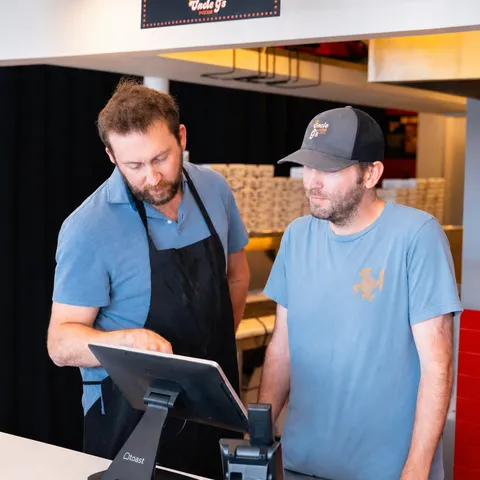
Toast, running in my restaurant and trucks right now: menus, online ordering, promos, the works. Not a certification. Production scars.
Do you do site visits?
Calls first. Video works from anywhere, and more of this gets fixed that way than you'd expect. But on-site is absolutely on the table: I'll go anywhere there's a truck or a kitchen worth fixing. Close to Birmingham, getting there is on me. Past that, travel is billed at what it costs and you'll see the number before anything's booked.
Will you tell me if my idea is bad?
Yes. Kindly, with numbers, and it'll sting less than six months of slow Fridays.
Open faster. Waste less. Clock out.
Whether you're staring at a builder's quote or working your 40th day straight, one call saves you weeks of guessing.