
Great Food and Service Aren’t Enough: Every Restaurant Needs One of These Three
- restaurant-margins
- lunch-service
- liquor-sales
- catering
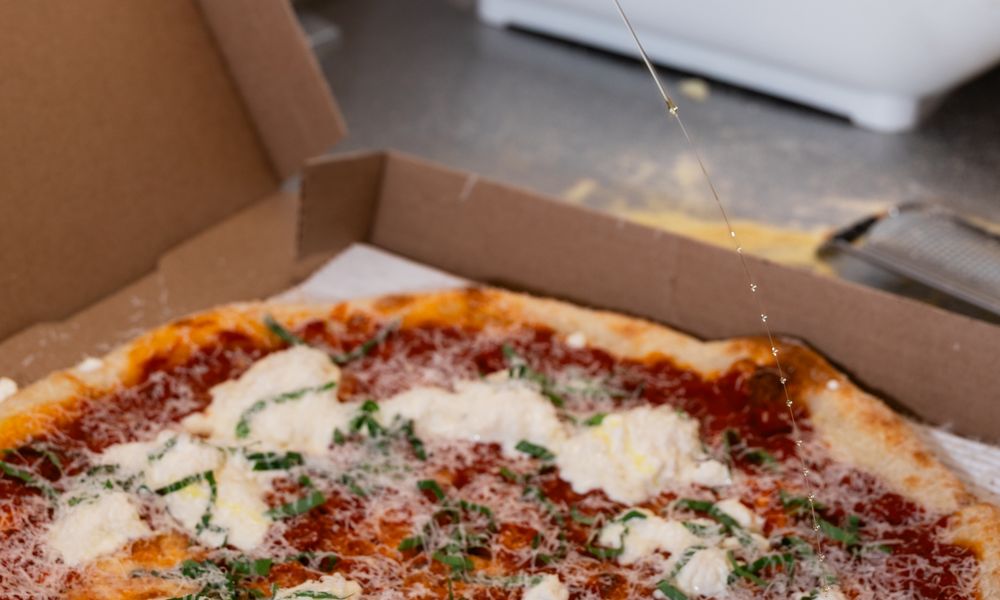
Your food is great. Your service is friendly. I believe you. So is everybody else’s, according to their own websites. Neither one is a strategy, and I want to talk about what is.
The thesis, straight up
I run one restaurant and two food trucks in Birmingham, Alabama. (Technically one is a trailer. The photos on the about page prove it.) Here’s the opinion I’ve landed on, and it is an opinion. Mine, hard-won, not a law of physics:
A restaurant that actually gets carried has at least one of these three things:
- A busy lunch service, five-plus days a week.
- Real liquor sales: cocktails and spirits doing real work, not a beer cooler humming in the corner.
- A steady catering arm: actual bookings on an actual calendar, not a “we cater!” line at the bottom of the website.
Notice what’s not on the list: a packed dining room at dinner. That’s on purpose. A busy dinner six nights a week is the entry fee. It’s the thing you should demand of yourself before this conversation even starts. If your whole plan is “we’ll be busy at dinner,” you don’t have a strategy. You have a hope with a hostess stand.
Miss all three and even a packed dining room can bleed. The room is full, the reviews are kind, and the bank account goes the wrong direction a little more every month.
Why great food and great service aren’t a moat
Two reasons. One is about marketing. One is about math.
The marketing reason: find me a restaurant website that says “pretty good food, distracted service.” Every restaurant in your town claims great food and warm service, in roughly the same fonts. The claim costs nothing, so the claim is worth nothing. Your guests can’t tell your “great” from the great three blocks over until they’re already in a seat, which means “great” doesn’t get them into the seat. It keeps them coming back. Those are different jobs.
The math reason: your costs don’t keep restaurant hours. The lease, the insurance, the loan payment, the walk-in compressor: those run 168 hours a week. A dinner-only restaurant is trying to cover a 168-hour cost structure with about 24 hours of actual selling time. Call it four hours a night, six nights. Everything you own sits dark and expensive the other 144 hours. Great food doesn’t fix that ratio. It can’t. The ratio is a structure problem, and food is not a structure.
And here’s the part that sounds like heresy from a guy who makes pizza for a living: quality is third in my operating order. Systems, then training, then quality, then service. Not because the food doesn’t matter (it’s the reason anybody shows up) but because without systems and trained people you can’t produce that quality twice in a row, and no amount of it fixes a revenue model with one skinny daypart.
The three things that carry a restaurant
Hold onto that 168/24 ratio, because it’s what makes the three carriers a list worth trusting instead of a listicle. Each one attacks the ratio from a different side, and they’re the only three sides it has. Lunch sells more of the hours you’re already paying for. Liquor makes the hours you’re selling worth more. Catering books revenue that doesn’t depend on the room’s hours at all. More hours, richer hours, hours off the clock entirely. I’ve never found a fourth kind, and I’ve looked.
Here’s the short version, then I’ll walk through each one.
| The carrier | What it actually is | Why it carries |
|---|---|---|
| Lunch, five-plus days | A second full daypart | Same rent, same equipment, more selling hours |
| Real liquor sales | Cocktails and spirits, not just a beer fridge | More margin on tickets you’re already ringing |
| Steady catering | Revenue booked before the day starts | Doesn’t depend on who walks in tonight |
1. A busy lunch, five-plus days a week
Your lease doesn’t know what time it is. The rent is the same whether the room is full at noon or dark until 4 p.m. A real lunch service is a second full business running on rent you were paying anyway: same ovens, same hood, same insurance, same address. That’s the whole argument. It’s boring and it’s undefeated.
But lunch is a different sport than dinner, and this is where most attempts die. Lunch guests are on the clock. They will love you and still never come back if you make them late twice. So lunch isn’t “dinner, but earlier.” It’s a speed system: a trimmed menu that fires fast, prep finished before the doors open, a line staffed for a sprint instead of a marathon, and ticket times you actually measure. Pizza happens to be a good lunch food (slices and combos move fast) but the principle holds for any menu: engineer for the clock, not for the photo.
The freedom part matters too. A lunch built on a written system doesn’t need the owner standing at the pass expediting it every day. A lunch built on adrenaline does. Every day, forever. Build the first kind.
2. Real liquor sales
In my experience, and in every industry number anyone has ever shown me, liquor is about the highest-margin thing a restaurant can legally sell. (Fountain soda technically wins on paper. Nobody builds a restaurant on soda.) The industry benchmarks bear it out: a well-run bar program pours at around 18–24% of the sale price (straight spirits often better, 15–20%) while food costs run closer to 28–35%. Beer runs thinner than spirits: bottled and canned pours cost around 25% of the sale, which is exactly why “we’ve got beer” doesn’t check this box. Real liquor sales means spirits and cocktails pulling weight on the check.
The volume logic is simple: a cocktail adds margin to a table you already sat, on rent you already paid, for a guest you already won. You’re not buying more covers. You’re making the covers you have worth more.
Two warnings. First, licensing is a local matter and I won’t pretend otherwise. The cost of a liquor license ranges from a few hundred dollars in some states to six figures in quota states, where the license itself trades on a secondary market (Florida quota licenses change hands for $100k+, New Jersey’s run higher still). Check your state ABC board and your county before building a plan on this. That’s not legal advice, that’s me telling you to make the phone call before you make the plan.
Second, an unmanaged bar doesn’t produce those margins. It leaks them. A real liquor program is a system: spec’d recipes so every pour is the same pour, inventory counted on a schedule so the margin shows up in the bank instead of evaporating, and bartenders you train and pay like the professionals they are. The bar carries you only if you build it like something that’s supposed to carry you.
3. A robust, steady catering arm
Catering is the only revenue in this business that doesn’t care who walks in tonight. It’s booked in advance. The headcount is known before you buy the first ingredient, which means the food cost is known before you spend it. You can take a deposit before you turn on a burner. Rain empties your patio. It does not cancel a Wednesday drop-off for a law office.
The trucks taught me this before the restaurant ever could. A food truck is basically a catering company with wheels. You don’t park somewhere and hope, or you learn very fast not to. You go where the demand is already scheduled.
I put $20k into my first food truck in 2021 and did $110k in revenue that first year. The biggest lesson from that year had nothing to do with pizza: revenue you can see coming is worth more than revenue you hope walks in. That lesson is the entire catering argument.
But notice the words in my thesis: robust and steady. A catering arm is not a “we cater!” graphic. It’s a pipeline: somebody answers inquiries within a day, the menu is built to survive transport, prep sheets scale by headcount so a 60-person job doesn’t require heroics, and there are future bookings on the calendar right now. If a catering job throws your whole kitchen into chaos, you don’t have a catering arm yet.
You build one of these. You don’t hope for one.
This whole post is really a systems argument wearing a margins costume. Systems, then training, then quality, then service. That order exists because hope is not a daypart.
Each of the three carriers is a system you construct on purpose:
- Lunch is a speed system: menu engineering, prep timing, staffing, measured ticket times.
- Liquor is a control system: written specs, scheduled counts, smart ordering, trained bartenders.
- Catering is a pipeline system: inquiry handling, transport-proof menus, prep sheets, a calendar with real dates on it.
And every one of them runs on training, because a system nobody has been taught is a binder on a shelf. Your people execute the carrier. Invest in them like it.
My advice is to pick one, the one that fits your building, your block, and your market, and build it deep before you touch a second. One carrier built deep beats three built shallow. Every jump in my own revenue ($110k in 2021, $550k in 2022 after the second truck, $1.1M in 2023, $1.4M in 2024 when the restaurant opened alongside both trucks) came after something I built on purpose with my crew, not a rush I got lucky with. When I work with operators, choosing and building that one carrier is a lot of the actual work. That’s what the consulting side of my week looks like.
The self-audit: score yourself, no flinching
Score each carrier 0, 1, or 2. Be the kind of honest you’d want from a business partner.
Lunch.
- 0: You’re closed at lunch, or open and empty.
- 1: You’re open, but some days the staff outnumbers the guests.
- 2: Five-plus days a week you’d call busy, out loud, with a straight face.
Liquor.
- 0: No license, or beer-only.
- 1: There’s a full bar, but nobody runs it. No written specs, no scheduled counts, margin is a rumor.
- 2: Specs written, inventory counted on a schedule, and a bartender you’d trust with a Saturday you don’t attend.
Catering.
- 0: “We cater” means you’d say yes if somebody asked.
- 1: A handful of jobs a year, all inbound, each one a scramble.
- 2: Future bookings on the calendar today, a transport-built menu, prep sheets that scale.
Two rules for scoring. First, don’t score from memory. Pull the daypart and category sales reports out of your POS. I run Toast across the restaurant and both trucks, and whatever you run, that report exists. Feelings round up. Reports don’t.
Second, read your total without flinching:
- Zero across the board: your dining room is carrying everything, and even packed, you’re one slow month from real trouble. No shame in this. I started at absolute zero, making pizza out of my house during COVID and running pop-ups. Zero is a starting line, not a verdict. But it is your starting line, and pretending otherwise is how good restaurants bleed quietly.
- One 2, the rest 0s: good. Deepen the 2 before you chase another carrier.
- All 1s: more dangerous than it looks: you’re paying for three systems and getting the benefit of none. Pick one and finish it.
Whichever carrier you pick, the follow-through is the same weekly habit: asking “did I actually make money this week?” and answering with a number instead of a feeling. My free Simple Truck P&L has “truck” in the name because that’s where I started, but the weekly discipline it drills is the exact muscle a restaurant needs, and it’s the first system I’d build before any of the three above.