
Moneyball for Pizza: Data, Discipline, and the Art of Running Lean
- restaurant-margins
- systems
- independent-restaurants
- technology
In the winter of 2001, the Oakland A’s lost their three best players to teams that could simply pay more. Their general manager, Billy Beane, was left with a roster budget around $40 million in a league where the Yankees opened the season at about $126 million.
He couldn’t outspend anybody. So he stopped trying, and asked a different question: what actually scores runs?
The answer made him famous, made the analytics guys employable, and eventually got him played by Brad Pitt. But the part that matters for you isn’t the Hollywood part. It’s that a broke team stopped copying rich teams and started counting the things that actually win games.
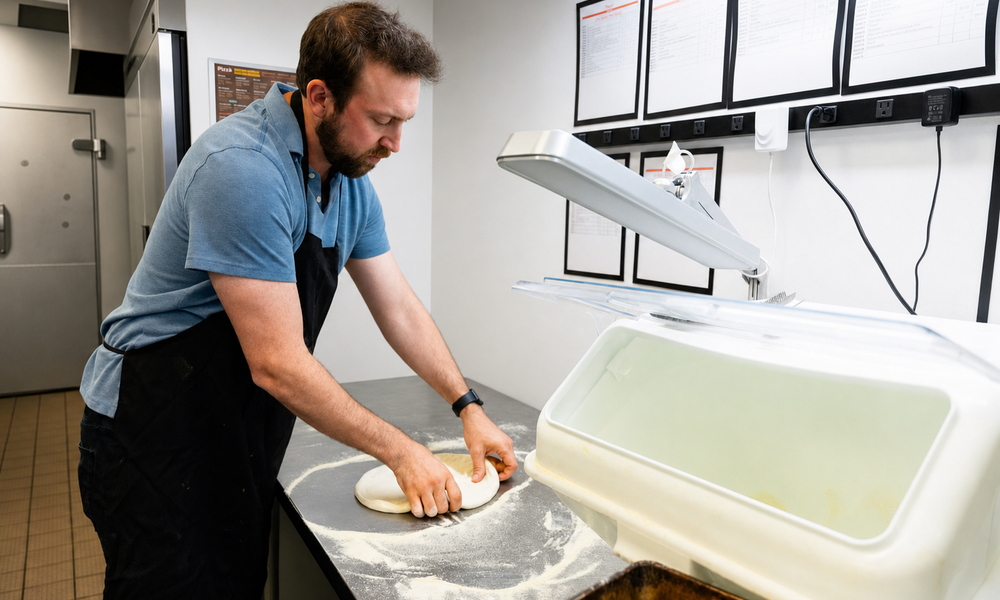
I run a pizza restaurant and two food trucks in Alabama. I promise you the restaurant game is the same game.
You are the small-market team
Domino’s has an app-development budget bigger than your building. The chains buy TV time, national data teams, and ad campaigns during football games. If you try to play their game (outspend and out-discount) you lose slowly, and then quickly.
But the A’s didn’t beat the Yankees’ budget. They beat the Yankees’ assumptions. Everyone was paying for batting average, stolen bases, how a guy looked in the uniform. Beane paid for the boring thing nobody valued: getting on base. As the movie puts it: “He gets on base.”
Walks weren’t glamorous. They just scored.
Your version of that is everywhere in your shop. The glamorous stuff (the viral video, the expansion announcement) is batting average. The boring stuff is on-base percentage: labor that matches your sales curve, food cost you can recite by item, regulars who come back on a Tuesday, tech that shaves minutes off every order. None of it makes the highlight reel. All of it scores.
Getting on base: why 1% edges compound
Here’s the trap with small improvements: individually, they’re insulting. One point of food cost. A few labor hours a week. A loyalty push that adds one visit a month for your best hundred customers. Any one of them feels too small to bother with, which is exactly why your competitors don’t bother.
But margins in this business are made of points. A pizzeria doesn’t usually die of one big wound. It bleeds out through forty small ones: the over-prepped dough that hits the trash, the Tuesday you staffed like a Friday. Fixing them one at a time doesn’t feel like winning. Neither does a walk. Then you look up in August and you’ve won twenty in a row.
At my place this looks unromantic on purpose. The POS already knows which menu items don’t earn their spot. We run audits that pull the real sales data and draft the price changes, and I approve them instead of guessing. Payroll paperwork preps itself before I sit down. The weekly P&L takes ten minutes because a system builds it, and I read it like a box score: where’d we leak, what moved, what do we test next week. No single one of those is impressive. Stacked, they’re the reason the lights stay on and the margins hold while bigger operators shrug and raise prices.
The old guard and the new guard
There’s a stretch of the movie where Beane’s scouts sit around a table doing what scouts had done for a hundred years (trusting their gut, talking about intangibles) while the numbers on the laptop say the gut is wrong. Not always wrong. But wrong often enough, in expensive enough ways, that “we’ve always done it this way” was costing them games they couldn’t afford to lose.
Pizza has the same argument running in every kitchen, and I want to be careful here, because I’m not on the side you might think. The craft is real. Feel matters. Dough tells your hands things a spreadsheet never will, and a twenty-year operator’s instinct about a slow night is data too, it’s just data stored in a person. The old guard isn’t stupid. They built this industry.
Sit with that phrase a second, because it’s the whole argument. Twenty years of slow Tuesdays, weather calls, and which regular orders what: that’s a dataset, a real one, bigger than anything my POS holds. It has exactly two problems. You can’t search it, and it walks out the door when the person does. The new tools aren’t a different kind of knowledge. They’re the exportable copy of the same knowledge, instinct you can hand a new hire on day one instead of hoping they accumulate their own decade. Which is why the old-guard-versus-new-guard fight is mostly fake. It’s the same information stored in two places, and only one of them survives a retirement.
The mistake isn’t trusting your gut. It’s only trusting your gut when the receipts are sitting right there. Your POS knows your real food cost per item. Your sales history knows what next Tuesday will do within a few hundred dollars. Your review pages know exactly what customers think you’re bad at. The new guard isn’t smarter. They’ve simply stopped ignoring free information.
The shops that win the next ten years are the ones that keep the craftsman’s hands and add the analyst’s eyes. Either one alone is a team that loses in the first round.
The firing scene: make the hard call clean
There’s a small scene that taught me more about running a business than most books. Beane makes his young assistant practice cutting a player, and the lesson is that you don’t soften it with twenty minutes of speeches. You say the true thing, directly, like a professional talking to a professional, and you let the man keep his dignity.
Most operators fail this test weekly, and not because they’re cruel, but because they’re nice. The special that loses money stays on the menu for a year because a regular likes it. The vendor who’s been overcharging you keeps the account because the rep is friendly. The Sunday hours that have never once penciled out survive because cutting them feels like retreat. And yes, sometimes it’s a person who’s wrong for the job, and everybody in the kitchen knows it a season before the owner says it out loud.
Slow hard calls don’t get softer. They compound, the same way the 1% gains do, just in the wrong direction. The discipline that makes lean work isn’t only counting things. It’s acting on the count, quickly and cleanly, and being straight with people while you do it. Eighty-six the item. Rebid the contract. Change the hours. Say the true thing directly and move.
The underdog advantage: you can turn the ship in an afternoon
Here’s the part the small-market framing gets wrong if you stop too early: you’re not just poorer than the chains. You’re also structurally faster, and speed is a weapon they cannot buy.
For a chain to change a topping, there’s a committee, a test market, a supply-chain review, and a quarter of meetings. You can decide a special at the prep bench in the morning and sell it at the window that night. You can change a price today. You can answer your own Google reviews personally, know your regulars by name, and say yes to the school fundraiser with a gift card before the chain’s regional manager has finished forwarding the email.
I started during the pandemic: pop-ups and pizzas out of my house, then about $20,000 into a first truck in 2021. That year did $110k. The second truck came in 2022 and the trucks did $550k, then $1.1 million in 2023, then the restaurant opened in 2024 alongside both trucks and the whole thing did $1.4 million. There is no version of that story where I out-muscled anybody. Every rung on that ladder was a small edge, tested fast, kept if it worked, killed if it didn’t, putting process and technology to work at a speed a franchise system physically can’t match. I even ended up building software when the tools I wanted didn’t exist.
The chains’ advantages are real but slow. Yours are small but immediate. Play the fast game.
The payoff: you don’t have to beat Domino’s
The 2002 A’s never had to outdraw the Yankees, outspend the Yankees, or become the Yankees. They had to win their division with the roster they could afford, and they won as many games as New York did that season doing it.
You don’t have to beat Domino’s either. You have to win a few miles around your front door. That’s the whole map. The national chain can’t love your neighborhood back, can’t taste-test at your bench on a Wednesday, can’t be the name people say when the school needs a donation. Your market isn’t “pizza in America.” It’s your slice of one town, and you win it the way lean teams win everything: a point of food cost here, a smarter schedule there, a regular who comes back one more time a month, a hard call made a season earlier than your competitor across town makes theirs. Win your market slice by slice.